
From฿ 3,324.24/ Pieces
This Month Promotion ❤️ with extra discounts up to 5%. Discounts for new customers, the more you buy, the more you save, up to 55,000 baht! Until November 30.
This Month Promotion ❤️ with extra discounts up to 5%. Discounts for new customers, the more you buy, the more you save, up to 55,000 baht! Until November 30.

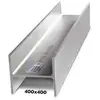
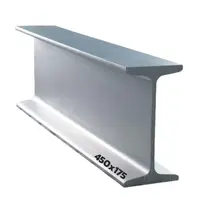
I Beam is suitable for groove crane use. With its thicker web and wider flange, it helps supporting the heavy load really well.



A collection of stories about the use of building materials that are suitable for construction. Deepen construction secrets for everyone. Know straight to the point
I-Beam Steel Best Price.
Use as groove crane. With its thicker web and wider flange, it helps supporting the heavy load really well.
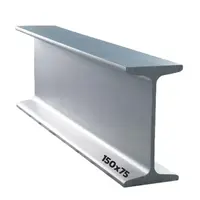
I beam consists horizontal element, called flanges and vertical element called web. The web resists shear forces while the flanges resist most of the bending moment. Due to its effectiveness in carrying both bending and shear loads, it is the most frequent for steel buildings, bridge and civil project. In many industrial knowledge will classify H-Beam and Wide Flange also under I-Beam category with slight differences in dimension, details and form. I-Beam in other industrial work also comprises of S-Shape beam.

H-Beam is available in a various of cross section sizes, from H100x100mm to H300x300mm, making H-Beam a versatile choice. Both the structure of the building and factory. Or large building such as hangar. I-Beam is made for more specific applications such as crane rails in industrial building. Because of the high flange thickness and the Taper appearance. Unlike H-beam, the thickness of the flange is equal from start to finish. As a result, I-Beam will be able to withstand impact. But it will have more weight than H-Beam in the same cross section size, such as
I-Beam will weigh up to 32% more than that of H-Beam.
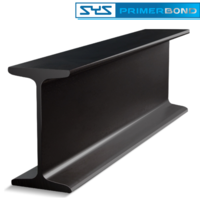
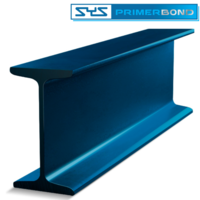
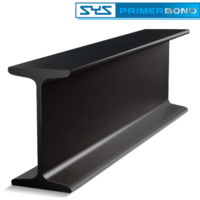
Prepainted I-Beam is the new solution proposed by SYS to made to order prepainted SYS
I-beams under TIS / JIS standards are specified as height x flange width (mm), where t1 is the web thickness and t2 is the flange thickness. Common sizes:
Size (mm) | t1 (mm) | t2 (mm) | Weight (kg/m) |
|---|---|---|---|
150 x 75 | 5.5 | 9.5 | 17.1 |
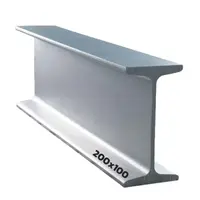
200 x 100 | 7 | 10 | 26 |
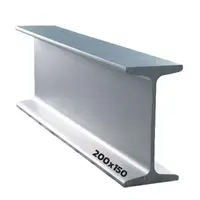
200 x 150 | 9 | 16 | 50.4 |
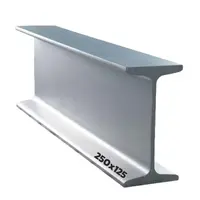
250 x 125 | 7.5 | 12.5 | 38.3 |
250 x 125 | 10 | 19 | 55.5 |
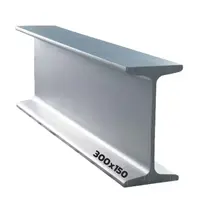
300 x 150 | 8 | 13 | 48.3 |
300 x 150 | 10 | 18.5 | 65.5 |
300 x 150 | 11.5 | 22 | 76.8 |
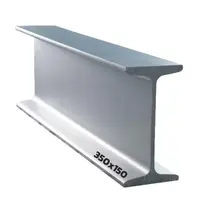
350 x 150 | 9 | 15 | 58.5 |
350 x 150 | 12 | 24 | 87.2 |
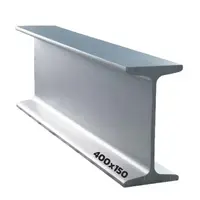
400 x 150 | 10 | 18 | 72 |
400 x 150 | 12.5 | 25 | 95.8 |
450 x 175 | 11 | 20 | 91.7 |
450 x 175 | 13 | 26 | 115 |
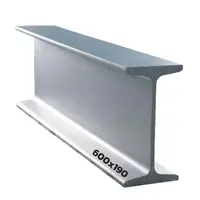
600 x 190 | 13 | 25 | 133 |
600 x 190 | 16 | 35 | 176 |
The same nominal size comes in several thicknesses, so match the weight per meter to what your engineer specified.
 PE Storage Water Tank
 Garden Hoses
 LED Lighting Bulb
 Ladder
 THW Electric wire
 Laundry
 NYY Electric wire
 Coffee Makers
 A4 Paper
 Toilets and Sanitary Ware
 building paint
 Circuit Breakers & Breaker Panels
 1000 Liter
 Covered Arc Welding Electrode for Mild Steel
 VCT Electric wire
 Waterproofing
 Black Film Faced Plywood
 PVC Water Pipes
 Gypsum Board