 Green
From฿ 142.06/ Bag
Supporting post-flood home restoration ❤️ with extra discounts up to 5%. Discounts for new customers, the more you buy, the more you save, up to 55,000 baht! Until October 31.
Supporting post-flood home restoration ❤️ with extra discounts up to 5%. Discounts for new customers, the more you buy, the more you save, up to 55,000 baht! Until October 31.
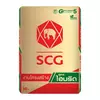
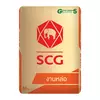
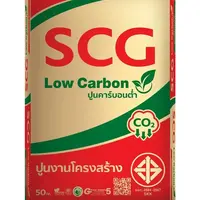
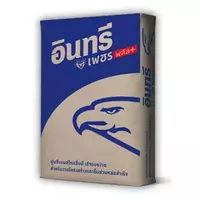
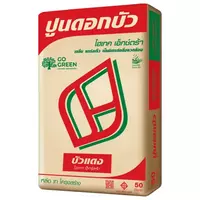
Hydraulic cement (TIS 2594), the newer red-bag cement that replaces Type 1 Portland cement in general structural work such as columns, beams, slabs and precast. Lower clinker content cuts carbon while giving a smooth, workable mix. SCG Hybrid, INSEE Diamond Plus and Lotus Red in 50 kg bags.
 Green
 Green
Hydraulic cement is a type of cement developed to meet a wide range of construction needs. Its main strengths are high compressive strength, resistance to chemical attack and a controlled heat of hydration. Hydraulic cement in Thailand is made to the Thai Industrial Standard TIS 2594-2556, which covers hydraulic cement specifically. Understanding its properties and uses helps contractors and project owners build strong, durable structures.
Key properties of hydraulic cement include consistent compressive strength, better sulfate and chloride resistance than standard Portland cement, and lower heat release during curing, which makes it well suited to large structures.
In Thailand, all hydraulic cement must meet the Thai Industrial Standard, specifically TIS 2594-2556 for hydraulic cement. The standard sets key chemical and physical requirements such as chemical composition, compressive strength, expansion, fineness and setting time to make sure the cement is safe and of consistent quality. Check the TIS certification of any hydraulic cement before use to get a compliant product and reduce risk on site.
Hydraulic Cement Type | Key Properties | Main Uses |
|---|---|---|
GU (General Use) | Consistent compressive strength, moderate heat reduction | General concrete structures, reinforced concrete |
MS (Moderate Sulfate Resistance) | Moderate sulfate resistance | Structures in areas with low to moderate sulfate exposure |
HS (High Sulfate Resistance) | High sulfate resistance | Structures in areas with very high sulfate exposure, such as foundations near the sea |
LH (Low Heat) | Low heat of hydration | Mass concrete structures that need temperature control |
Hydraulic cement is widely used in the construction industry thanks to its properties. It suits general reinforced concrete structures, foundations and piles, precast concrete, and structures that must withstand high-sulfate environments. GU hydraulic cement is the most popular type for general construction that needs strength and durability.
Choose hydraulic cement based on the application and the properties you need. Leading brands such as SCG, INSEE and Lotus offer a range of TIS-certified hydraulic cement products. To check hydraulic cement prices and product specs, including SCG hydraulic cement, and to find out what hydraulic cement is and which grade fits your job, compare the options at OneStockHome, a one-stop source for quality building materials. Complete information on hydraulic cement, prices and specific properties helps you choose the right product for your project with confidence.
 PE Storage Water Tank
 Garden Hoses
 LED Lighting Bulb
 Ladder
 THW Electric wire
 Laundry
 NYY Electric wire
 Coffee Makers
 A4 Paper
 Toilets and Sanitary Ware
 building paint
 Circuit Breakers & Breaker Panels
 1000 Liter
 Covered Arc Welding Electrode for Mild Steel
 VCT Electric wire
 Waterproofing
 Black Film Faced Plywood
 PVC Water Pipes
 Gypsum Board