
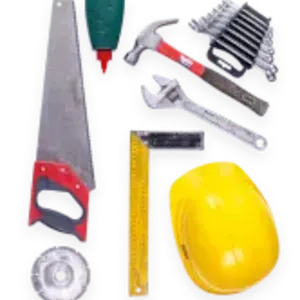
You don't need every tool, just the ones you use most, in the right sizes. This guide covers the basic hand tools every home should have, how to choose each one, and whether to buy a set or single pieces.
Which basic hand tools do you need?
These 10 tools cover most home repairs and everyday installation jobs.
Tool | Used for | Common sizes |
|---|---|---|
Screws, furniture assembly, outlet covers | Phillips PH1, PH2 and 5-6 mm flat | |
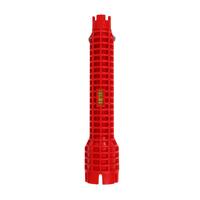
Nuts and bolts | 8-24 mm set | |
Faster fastening, tight spaces | 3/8 in. or 1/2 in. drive | |
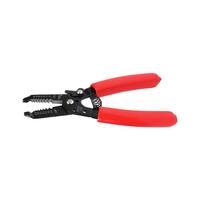
Gripping, bending, cutting wire | Lineman's, long-nose, diagonal 6-8 in. | |
Driving and pulling nails | 16-20 oz claw hammer | |
Measuring and marking | 5 m for home, 7.5-10 m on site | |
Checking level and plumb | 60 cm / 24 in. | |
Tape, drywall, cable sheathing | 18 mm blade | |
Wood, pipe and metal | 12 in. hacksaw and a hand saw | |
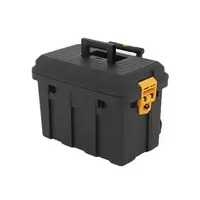
Keeping tools organized | 14-20 in., by how many tools you own |
How to choose each tool
Screwdrivers
Match the tip to the screw head. A PH2 Phillips fits most screws around the house; a tip that is too small or too large strips the head. For electrical work, choose insulated screwdrivers rated to 1,000 V (VDE) and keep a voltage tester screwdriver on hand.
Wrenches and sockets
A wrench must fit the nut exactly; even a little play rounds off the corners. For home use, start with an 8-24 mm set. 6-point sockets grip tighter and suit seized or rusty nuts; 12-point sockets go on faster in tight spots. For tools that last, look for chrome vanadium (CR-V) steel, which is hard and resists chipping.
Pliers
Lineman's (combination) pliers are the most versatile: they grip, bend and cut wire. Long-nose pliers suit tight spaces and wiring, and diagonal cutters give a clean cut on wire and component leads. If you buy just one, start with 8 in. combination pliers with comfortable rubber grips.
Hammers and saws
A 16 oz (about 450 g) claw hammer drives and pulls nails for most home jobs; framing and heavier work call for 20 oz or more. Pick a saw for the material: a hacksaw with a fine blade (18-32 teeth per inch) cuts metal, and finer teeth suit thinner metal. For wood, see woodworking tools.
Measuring tools
A good tape measure has a hook with a little play, so it measures accurately both hooked over an edge and pushed against a wall. A blade 25 mm or wider extends farther without buckling. Choose a level with both horizontal and vertical vials, and use a laser distance meter for long distances or room measurements.
Tool set or single tools?
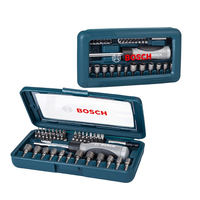
A tool set suits beginners: the core tools come in one case, usually for less than buying them one by one. Check that the set holds the sizes you will actually use, such as a PH2 screwdriver and 10, 12 and 14 mm wrenches; a high piece count made up of tiny bits is rarely good value. If you already own some tools, buying single pieces lets you choose the brand and grade of the ones you use hardest.
Tool box, tool bag or tool cabinet
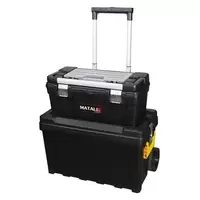
Plastic tool boxes are light and rust-free, fine for home use; steel boxes hold up better under heavy loads. A tool bag gives quick access and is easy to carry up a ladder, while a multi-drawer cabinet or tool cart suits garages and workshops with many tools in one place.
Make your tools last
- Wipe off water, cement and oil after use, and store tools somewhere dry.
- Put a light coat of oil on plier joints and ratchet heads now and then to stop rust and keep them moving freely.
- Don't pry with a screwdriver or hammer with a wrench; tips chip and handles break.
- Replace dull saw and utility knife blades. A dull blade takes more force and is more likely to slip.
FAQ
What basic tools should every home have?
Phillips and flat screwdrivers, wrenches, combination pliers, a hammer, a tape measure, a level, a utility knife and a saw, plus a tool box. That covers almost every home repair.
How is CR-V steel different from ordinary steel?
CR-V is steel alloyed with chromium and vanadium. It is harder, takes more torque and rusts more slowly than plain carbon steel, which is why it is used for professional-grade wrenches, sockets and screwdrivers.
Where are nuts, screws and power tools?
This category holds hand tools only. See nuts and screws, power tools and ladders in their own categories, and order them together in one OneStockHome order.
 BOSCH
 MATALL
 PUMPKIN
 Saw and Saw Blade
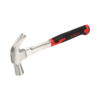 Hammer
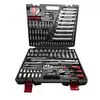 Tool Set
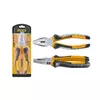 Pliers
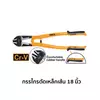 Cutter
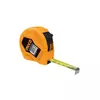 Measuring Tape and Water level meter
 Caulking gun
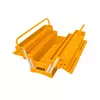 Tool box
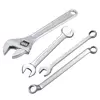 Wrench
 Grinding Tools
 Woodworking tools
 Hatchet
 Screwdriver
 Socket Wrenches
 Knife
 Soldering